Showing posts with label Night. Show all posts
Saturday, February 14, 2015
Monday, October 13, 2014
St. Kilda at Night
St. Kilda is one of my favourite locations in Melbourne, especially to play with my photographic gears. The beautiful sandy beach, walking trail, palm fringed road, pier with kiosk, boats and yachts, great view of Melbourne's skyline, and little penguins all give lots of opportunities to press the shutter release.
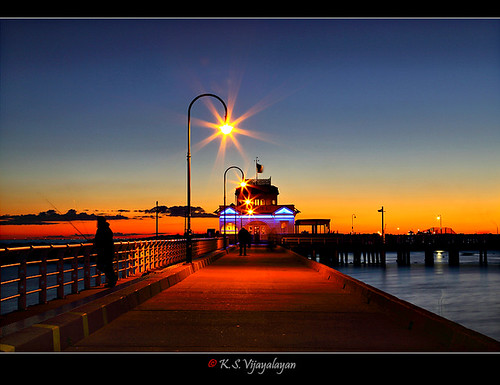
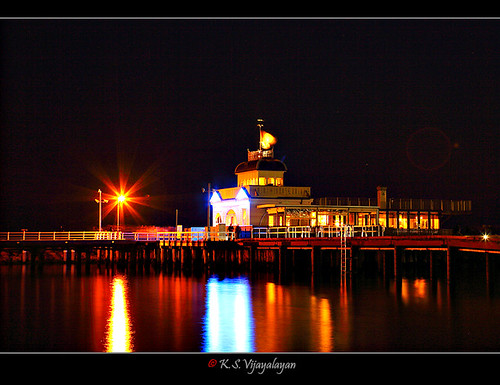
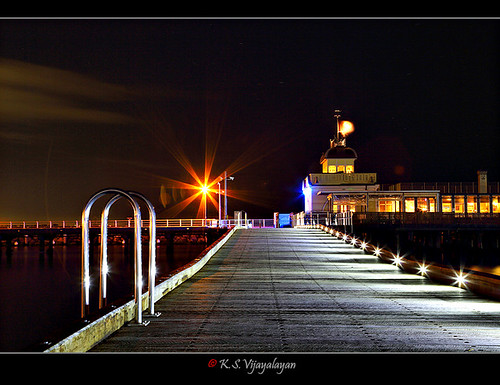
When we had to choose a location at the last minute for a Friday night photo-walk, we chose St. Kilda unanimously. Though just missed the sunset by the time we reached there, we were not disappointed. Here are the sample shots of the night:
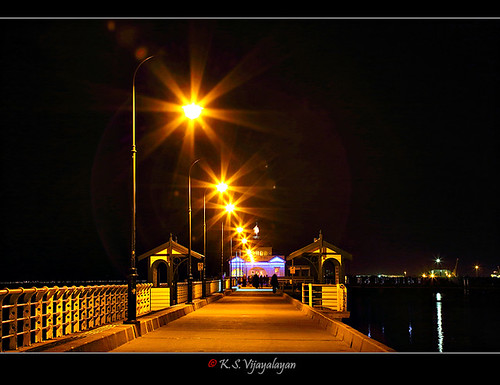
St. Kilda Pier and Pavilion
St. Kilda Pavilion
Another perspective of St. Kilda Pavilion
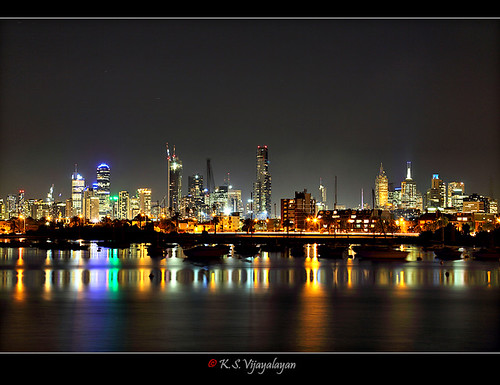
Melbourne skyline at night
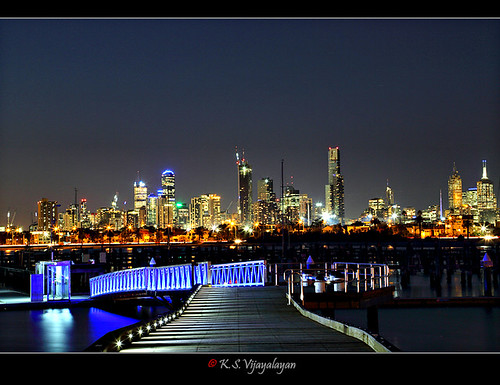
St. Kilda Jetty and Melbourne skyline
St. Kilda Pier and Pavilion
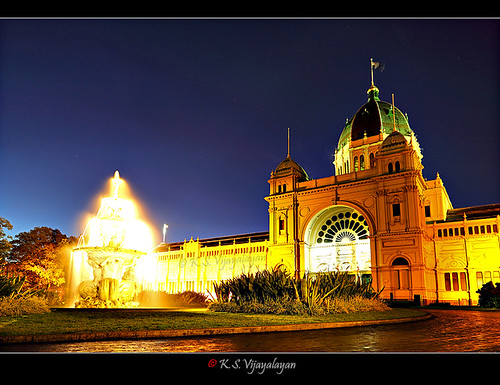
Sunday, May 25, 2014
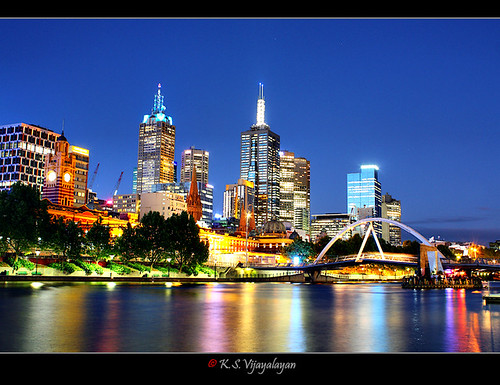
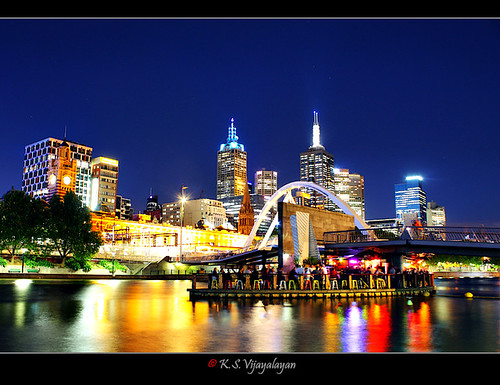
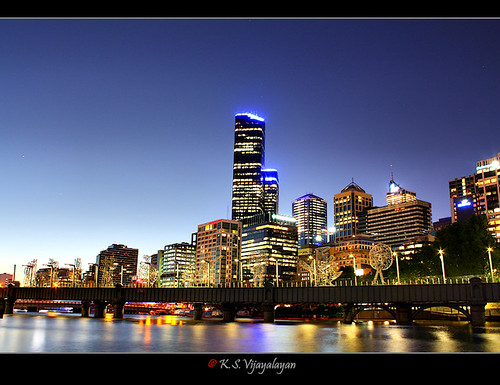
Night views from the South bank, Melbourne
One fine Friday evening, my colleagues and myself decided to spend few hours along the South Bank to shoot the sunset and night views. We reached the bank near St. Kilda raod well ahead of the sunset and scouted for locations upto Queensbridge Street.
Dry summer did not produced dramatic sunset colours we wished and without wasting time we positioned ourselves at our premarked locations for the night shots. The night shots taken over the next one hour were rewarding enough. Next, we waited for the number people on the foot bridges to come down for better and closer views of the bridges. Unfortunately we got dissappointed as the lights on the bridges across the river were switched off by the time we got on, most probably to save energy. Here are my favourite clicks from the evening/night photoshoot.
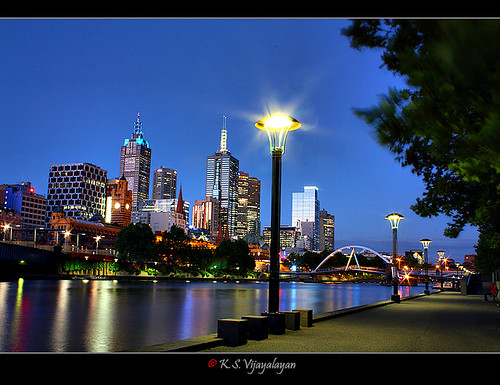
Lamp-posts add glamour to the South Bank
Southbank footbridge, Flinders street railway station, and skyscrapers add beauty
Ponyfish Island is fully packed with diners
Sandridge bridge and some more skyscrapers
Wednesday, November 24, 2010
Tuesday, April 13, 2010
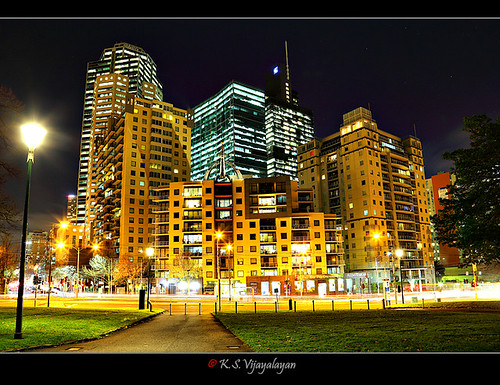
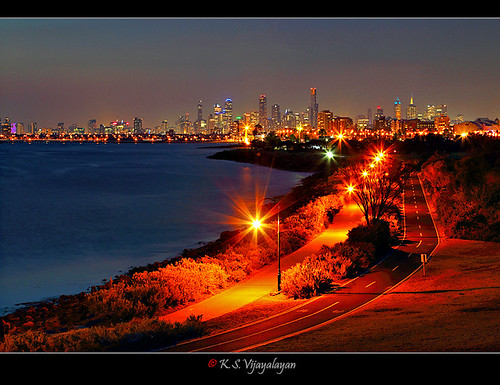
Star effect from street lights
The "Star effect" is a stunning phenomenon in nocturnal photography that can be captured by reducing the aperture size (ie, increasing f-number) of a camera's lens whenever there is light source small enough when compared with the whole view. As a rule of thumb, selecting f-number greater than or equal to f/18 (i.e., f/18, f/20, f/22) makes the bright light sources like street-lights, vehicle lights, etc appearing like stars. The number of blades that make up the iris (or aperture) of the lens dictates the number of points on a star-burst.
It has to be noted that shooting in the dark and small apertures results in very slow shutter speeds. Hence, a camera stabilizer, e.g., a tripod, is essential.
There are "Star effect" filters available with different numbers of points (Eg: 4, 6 or 8) to enforce star effect even at lower f-numbers for relatively higher shutter speeds. Even though star effect filters help to create star like appearance of street lights with cameras possibly hand-held, the 'artificial' effects tend to be artificial and less attractive.
It has to be noted that shooting in the dark and small apertures results in very slow shutter speeds. Hence, a camera stabilizer, e.g., a tripod, is essential.
View of Melbourne (F=22, Exposure time=30 sec, ISO=100)
There are "Star effect" filters available with different numbers of points (Eg: 4, 6 or 8) to enforce star effect even at lower f-numbers for relatively higher shutter speeds. Even though star effect filters help to create star like appearance of street lights with cameras possibly hand-held, the 'artificial' effects tend to be artificial and less attractive.
Subscribe to:
Comments (Atom)